

Introduction
Structural drawings form the backbone of any construction project, providing critical information that guides builders, contractors, and tradespeople through the building process. While these technical documents might initially seem overwhelming with their specialized symbols and notations, understanding their basic components can help homeowners better engage with their renovation or construction projects.
Key Highlights
Here are the essential points about understanding structural drawings:
- Structural drawings serve as the blueprint for how a building will stand and support itself
- Key components include general notes, floor plans, elevations, sections, and connection details
- Common symbols represent beams, columns, foundations, and load-bearing walls
- Scale and dimensions are critical for accurate construction
- Understanding these basics helps homeowners communicate effectively with professionals
What Are Structural Drawings?

Structural drawings are technical documents that illustrate how a building’s structural elements will be constructed to safely support and transfer loads to the ground. These specialized plans focus specifically on the load-bearing components of a building—the skeleton that keeps everything standing—rather than architectural features or mechanical systems. Created by structural engineers after careful calculations, these drawings communicate precise instructions to builders about materials, dimensions, connections, and placement of structural elements like beams, columns, foundations, and load-bearing walls.
The Purpose of Structural Drawings
The primary purpose of structural drawings is to provide construction teams with detailed instructions for building the structural system safely and according to engineering calculations. They serve as a vital communication tool between engineers, architects, contractors, and building officials, ensuring that everyone understands exactly how the structure should be built to maintain integrity. For homeowners undertaking renovations or new builds, these drawings become part of your building control submission and serve as the approved plan that contractors must follow. Understanding their basic elements can help you better monitor your project’s progress and have more informed discussions with your structural engineer and builder.
Common Elements in Structural Drawings
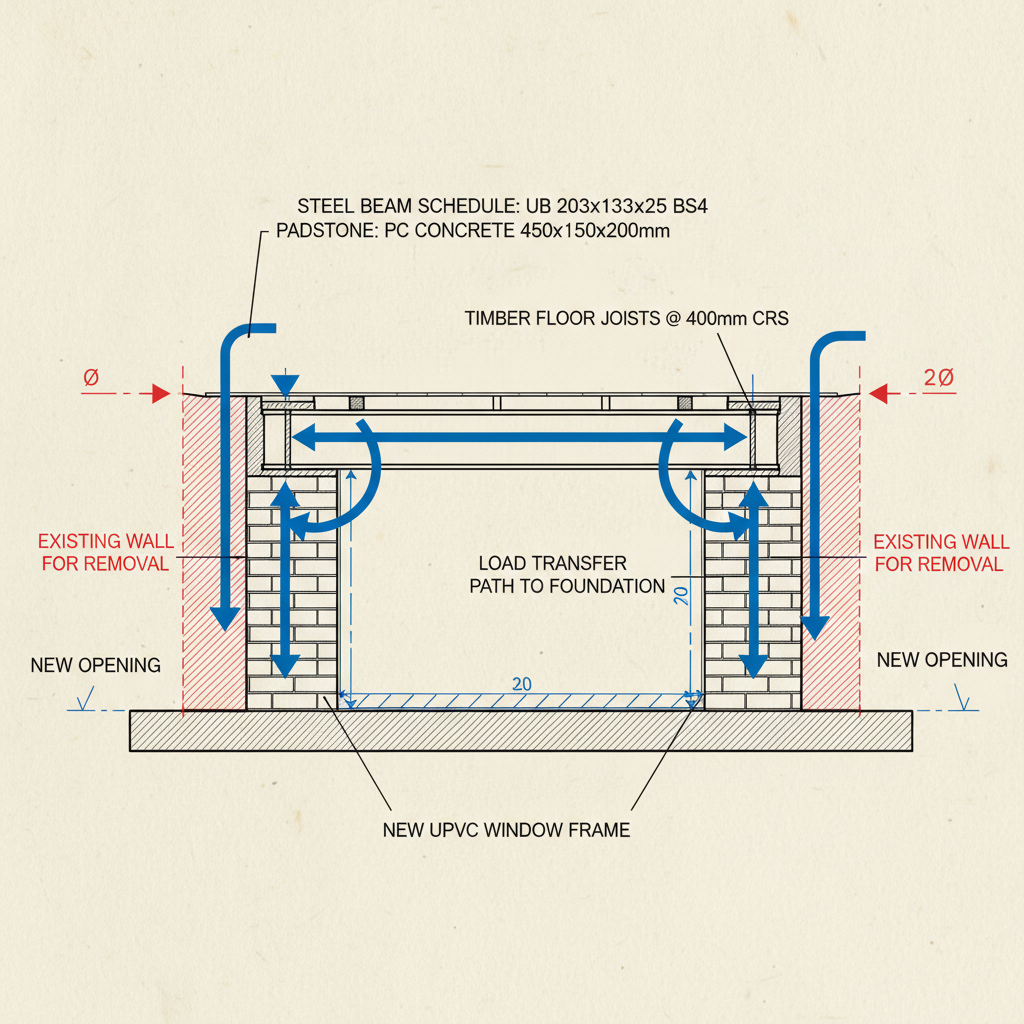
Structural drawings typically contain several standard components that work together to convey the complete structural design. The general notes section includes information about material specifications, required testing, and applicable building codes. Floor plans show the layout of structural elements as viewed from above, including beam locations, column positions, and wall placements. Elevations provide side views of the structure, showing heights and vertical relationships between components. Section views cut through the building to reveal how different structural elements connect and interact, while details zoom in on specific connections or assemblies that require precise execution.
Understanding Symbols and Annotations
One of the most challenging aspects of reading structural drawings is interpreting the various symbols and annotations used throughout the plans. Steel beams are typically represented by straight lines with size annotations (such as “254 x 146 UB 31”), while concrete elements often appear as hatched or shaded areas with reinforcement details. Load-bearing walls are drawn with thicker lines than non-structural partitions, and columns appear as rectangles or circles with specific notations about size and material. Dimension lines with numerical values indicate precise measurements, while directional symbols like “N” (north) help orient the drawings. Annotations might include abbreviations like “FFL” (finished floor level) or “SLS” (serviceability limit state) that have specific technical meanings in structural engineering.
How to Interpret Dimensions and Scales

Understanding the scale of structural drawings is crucial for interpreting them correctly. Most structural drawings include a scale indicator, such as 1:50 or 1:100, which means that 1 unit on the drawing equals 50 or 100 of the same units in real life. When reading dimensions, it’s important to note that structural drawings typically use millimeters as the standard unit in the UK, often without explicitly stating “mm.” Dimensions are usually provided between centerlines of structural elements rather than to the edges, which allows for more precise positioning during construction. For critical measurements, always refer to the written dimensions rather than scaling from the drawing, as the printed or displayed size might not be exactly to scale.
Using Structural Drawings in Home Projects
For homeowners undertaking home renovation projects, structural drawings provide valuable information that can help you understand what’s being proposed and monitor construction progress. Before construction begins, review the drawings with your engineer or architect to understand key structural changes and how they’ll affect your home. During the build, use the drawings as a reference point when discussing progress or changes with your contractor, and refer to them if you have concerns about whether work is being completed as specified. Keep in mind that while understanding the basics is helpful, the technical complexity of these drawings means you should always consult with professionals about interpretation questions rather than making assumptions.
Conclusion
While structural drawings contain specialized information that professionals spend years learning to create and interpret fully, gaining a basic understanding of their components can be valuable for any homeowner involved in a construction project. Familiarity with these technical documents enables more productive conversations with your design and construction team, potentially helping you spot issues before they become problems. If you have specific questions about your project’s structural drawings, don’t hesitate to ask your structural engineer for clarification—they’re there to ensure your home is built safely and according to plan.
Sources
Institution of Structural Engineers: Reading Structural Drawings
UK Building Regulations Approved Documents
Chartered Institute of Building: Construction Drawings Guide