
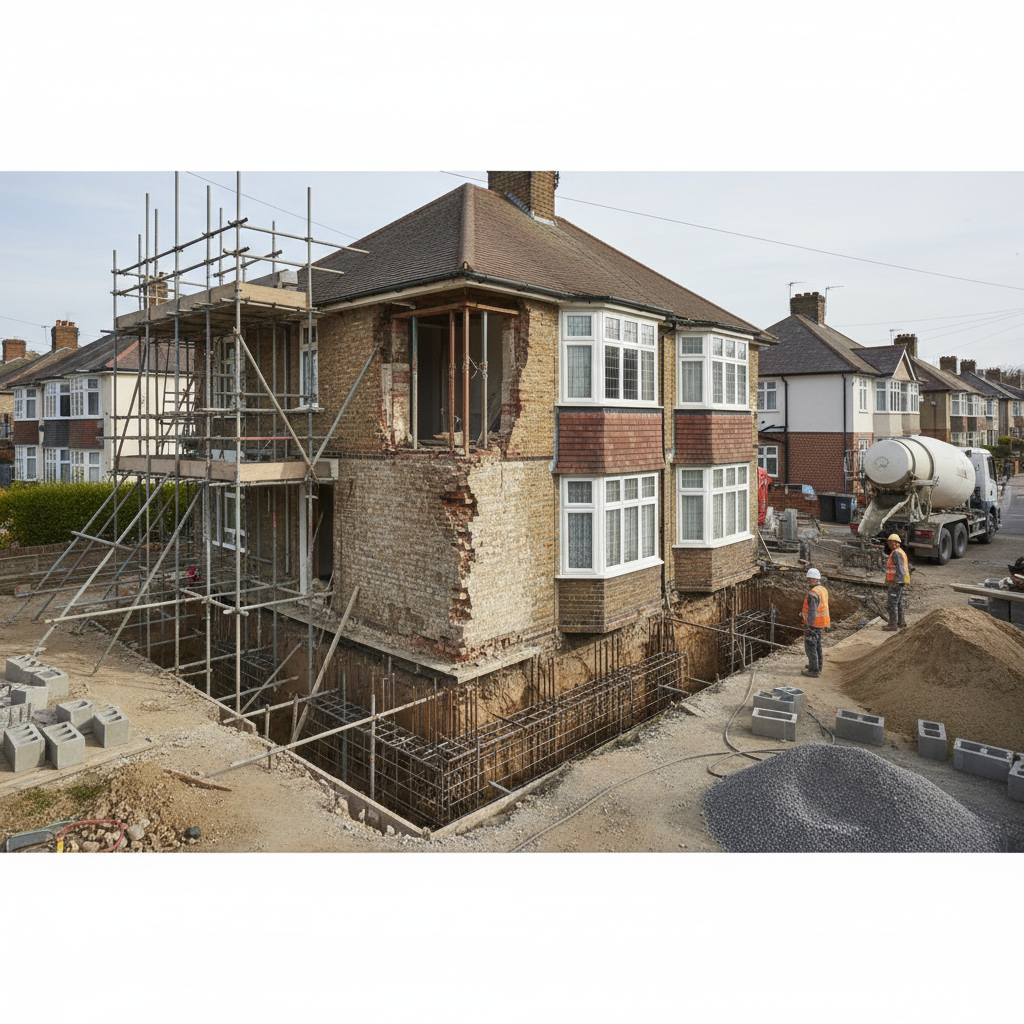
Understanding Underpinning: Reinforcing Your Home’s Foundation
Foundation problems can significantly impact your home’s structural integrity, often manifesting through wall cracks, uneven floors, or sticking doors and windows. Underpinning is a specialized structural engineering technique used to strengthen existing foundations that have become unstable or inadequate for supporting the building above.
Key Highlights
Here’s what homeowners should know about foundation underpinning:
- Underpinning strengthens and deepens existing foundations without requiring complete rebuilding.
- Common signs that indicate potential foundation problems include diagonal cracks, sloping floors, and doors that won’t close properly.
- The process typically takes 4-8 weeks depending on property size and underpinning method used.
- Most underpinning projects require planning permission, building regulations approval, and possibly party wall agreements.
- Costs typically range from £10,000 to £50,000 depending on property size and complexity.
Identifying Foundation Problems
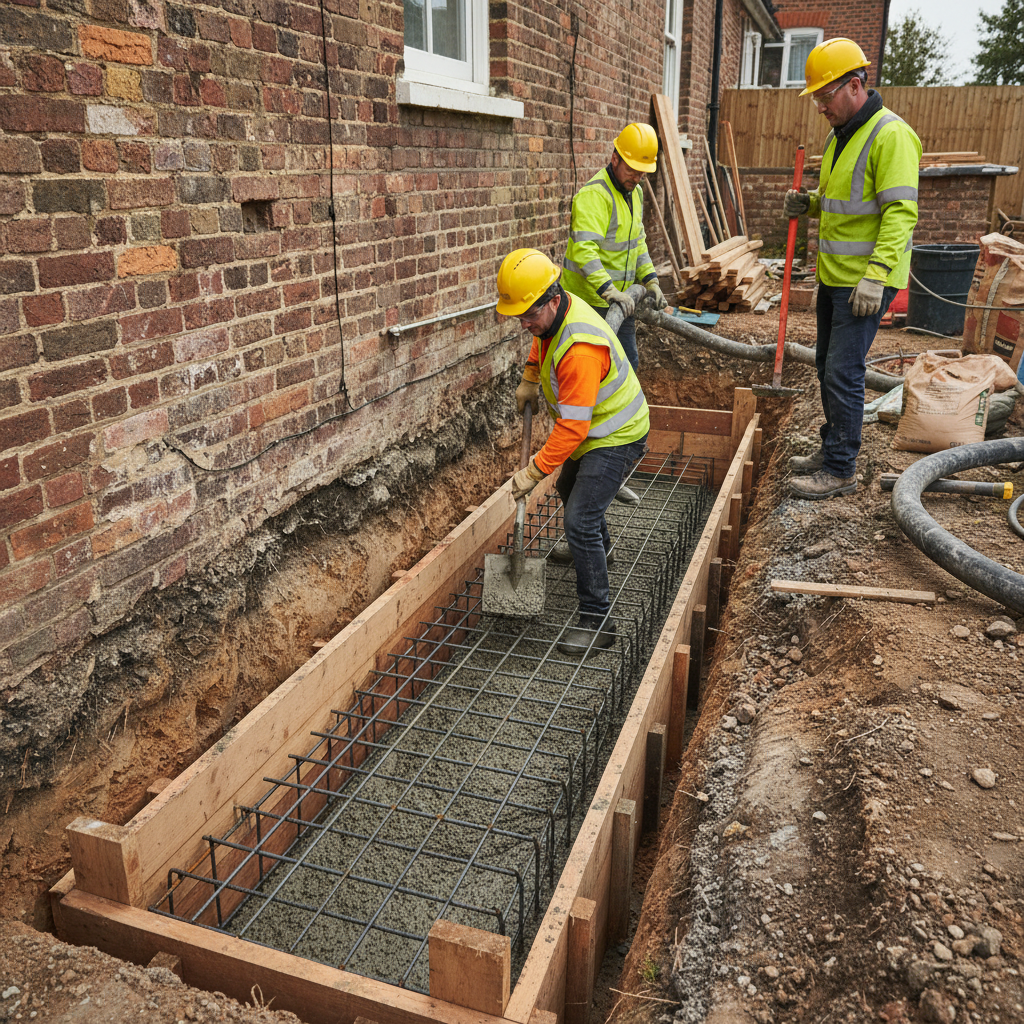
Recognizing the early warning signs of foundation issues can save you considerable expense and prevent more serious structural damage. The most common indicators include diagonal cracks in walls (particularly around windows and doors), windows and doors that stick or won’t close properly, and noticeable slopes in floors. Other telltale signs include gaps between walls and ceilings or floors, and exterior cracks in brickwork following a stepped pattern along the mortar joints.
If you’ve noticed these symptoms, it’s important to have your property assessed by a structural engineer rather than assuming the worst. According to the Institution of Structural Engineers, many wall cracks are cosmetic rather than structural, but proper evaluation is essential. A comprehensive assessment of cracks in your walls involves measuring their width, direction, and pattern to determine if they indicate foundation movement.
Common Causes of Foundation Problems
Several factors can contribute to foundation failures that might necessitate underpinning. Soil-related issues are among the most common culprits, particularly in areas with clay soils that expand when wet and shrink when dry, causing seasonal movement beneath foundations. This problem has been exacerbated in recent years due to more extreme weather patterns across the UK.
Other common causes include inadequate original foundation design, where the foundation wasn’t built deep enough or strong enough for the structure or soil conditions. Water damage from poor drainage, leaking pipes, or improper management of groundwater can gradually erode soil beneath foundations. Additionally, nearby construction work, including basement excavations and tree removal, can change the soil conditions surrounding your property. The Building Research Establishment notes that approximately 10% of UK properties experience some degree of foundation movement during their lifespan, with about 2% requiring professional intervention.
Types of Underpinning Methods
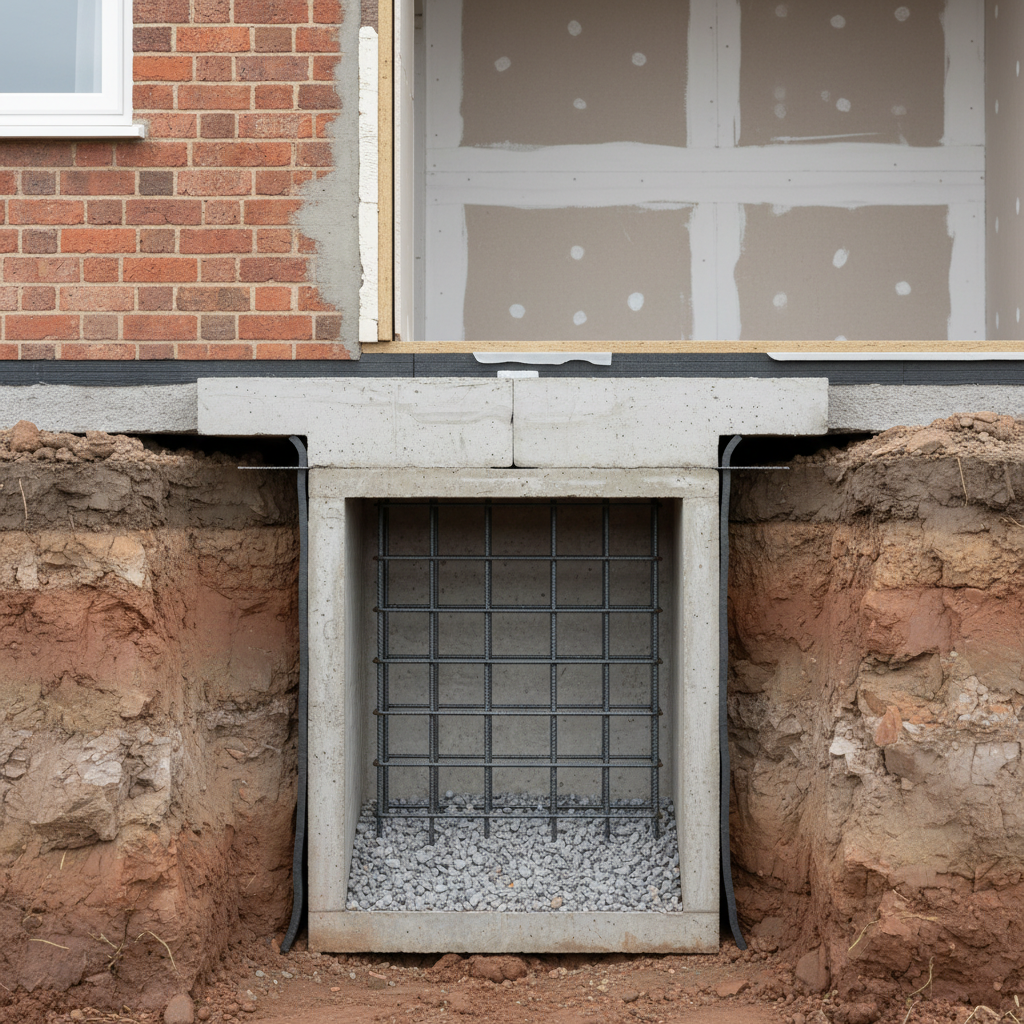
Several underpinning techniques are available, each suited to different foundation problems and property types. The most traditional approach is mass concrete underpinning, which involves excavating sections beneath the existing foundation in sequence, filling them with concrete, and allowing each section to cure before moving to adjacent sections. This method creates a deeper, stronger foundation beneath the original one and works well for most residential properties.
For properties requiring less disruption or where access is limited, mini-piled underpinning offers an effective alternative. This technique uses small-diameter steel piles driven or screwed into the ground until they reach stable soil or bedrock, then connects them to the existing foundation with reinforced concrete. For properties with unstable soil conditions, beam and base underpinning creates a reinforced concrete beam that spans beneath the existing foundation and transfers load to new concrete bases. Each method has specific applications, and the right choice depends on soil conditions, property type, access limitations, and budget constraints.
The Underpinning Process
The underpinning process follows a structured sequence designed to maintain the building’s stability throughout. Initially, a structural engineer conducts a thorough site investigation, including soil analysis and foundation assessment, to determine the appropriate underpinning method. Following this assessment, detailed designs and calculations are prepared, and necessary permissions obtained.
During the construction phase, the property is carefully monitored for any movement. For traditional mass concrete underpinning, work proceeds in alternating sections called “pins” to maintain stability. Each pin is excavated to the required depth, filled with concrete, and allowed to cure before adjacent sections are excavated. This sequential approach ensures that the building remains supported throughout. For piled methods, specialized drilling or driving equipment installs the piles before connecting them to the existing structure. Throughout the process, temporary supports may be installed, and the building’s level is constantly monitored to ensure no additional movement occurs.
Legal and Planning Requirements

Underpinning work typically requires several formal approvals before proceeding. Building Regulations approval is mandatory, as underpinning constitutes a significant structural alteration. You’ll need to submit detailed plans and calculations prepared by a structural engineer to your local building control department or an approved inspector. Depending on your property and the extent of works, planning permission may also be required, particularly for listed buildings or properties in conservation areas.
If your property shares a wall with neighbors, the Party Wall Act applies, requiring you to serve notice to adjacent property owners at least one month before work begins. This legal requirement protects both parties and establishes a formal agreement regarding the works. It’s also essential to notify your home insurance provider about the underpinning work, as failure to disclose such significant structural modifications could invalidate your policy. Many homeowners find that professional indemnity insurance from the contractor or engineer provides additional protection during and after the project.
Cost Considerations and Project Timeline
The cost of underpinning varies significantly based on several factors, including property size, underpinning method, soil conditions, and your location within the UK. As a general guideline, traditional mass concrete underpinning typically costs between £1,000 and £1,500 per linear meter of wall. For an average three-bedroom semi-detached house requiring underpinning along one wall, costs might range from £10,000 to £20,000, while complete underpinning of a larger property can exceed £50,000.
Beyond the underpinning itself, you should budget for associated costs such as structural engineer fees (£1,000-£2,500), building regulation fees (£500-£1,000), and potential temporary accommodation if the work makes your home uninhabitable. Most underpinning projects take between 4 and 8 weeks to complete, though this timeline can extend for larger properties or if complications arise. When selecting contractors, prioritize those with specific underpinning experience and membership in recognized trade bodies such as the Association of Specialist Underpinning Contractors, rather than general builders who may lack specialized knowledge.
Preventing Future Foundation Problems
Once underpinning is complete, maintaining stable foundation conditions becomes essential to protect your investment. Proper water management around your property is critical, including regular cleaning of gutters and downspouts and ensuring the ground slopes away from your foundation to prevent water accumulation. Installing or improving drainage systems can help direct water away from vulnerable areas.
Consider the impact of vegetation near your home, as trees and large shrubs can extract moisture from the soil, causing shrinkage and subsequent settlement. The Royal Horticultural Society recommends that trees should be planted at a distance equal to their mature height from your home’s foundation. Regular monitoring for new cracks or other signs of movement allows early intervention if problems recur. After completing underpinning work, many structural engineers recommend annual inspections for the first few years to ensure the solution remains effective. Understanding the appropriate foundation system for your property can help you make informed decisions about future modifications.
Conclusion
Underpinning represents a significant but sometimes necessary investment to preserve your property’s structural integrity and value. While the process may seem disruptive and costly, properly executed underpinning can add decades to your home’s lifespan while preventing more extensive damage. By understanding the warning signs, process, and requirements, you’ll be better prepared to address foundation issues promptly and select the most appropriate solution for your specific circumstances.
Sources
UK Government – Party Wall Act guidance
Building Research Establishment – Foundation movement statistics