

The Importance of Tolerances in Steel Frame Construction
In structural engineering, tolerances define the acceptable variations from specified dimensions during construction. They are crucial in steel frame construction because even small deviations can significantly impact the integrity, function, and appearance of a building.
Key Highlights
Understanding steel frame tolerances helps ensure successful construction projects:
- Tolerances account for inevitable dimensional variations during fabrication and erection
- British Standards specify acceptable tolerance ranges for different structural elements
- Proper tolerance management prevents costly rework and construction delays
- Regular inspection and adjustment during installation maintains tolerance compliance
- Effective communication between engineers, fabricators, and contractors is essential
Why Tolerances Matter in Steel Construction
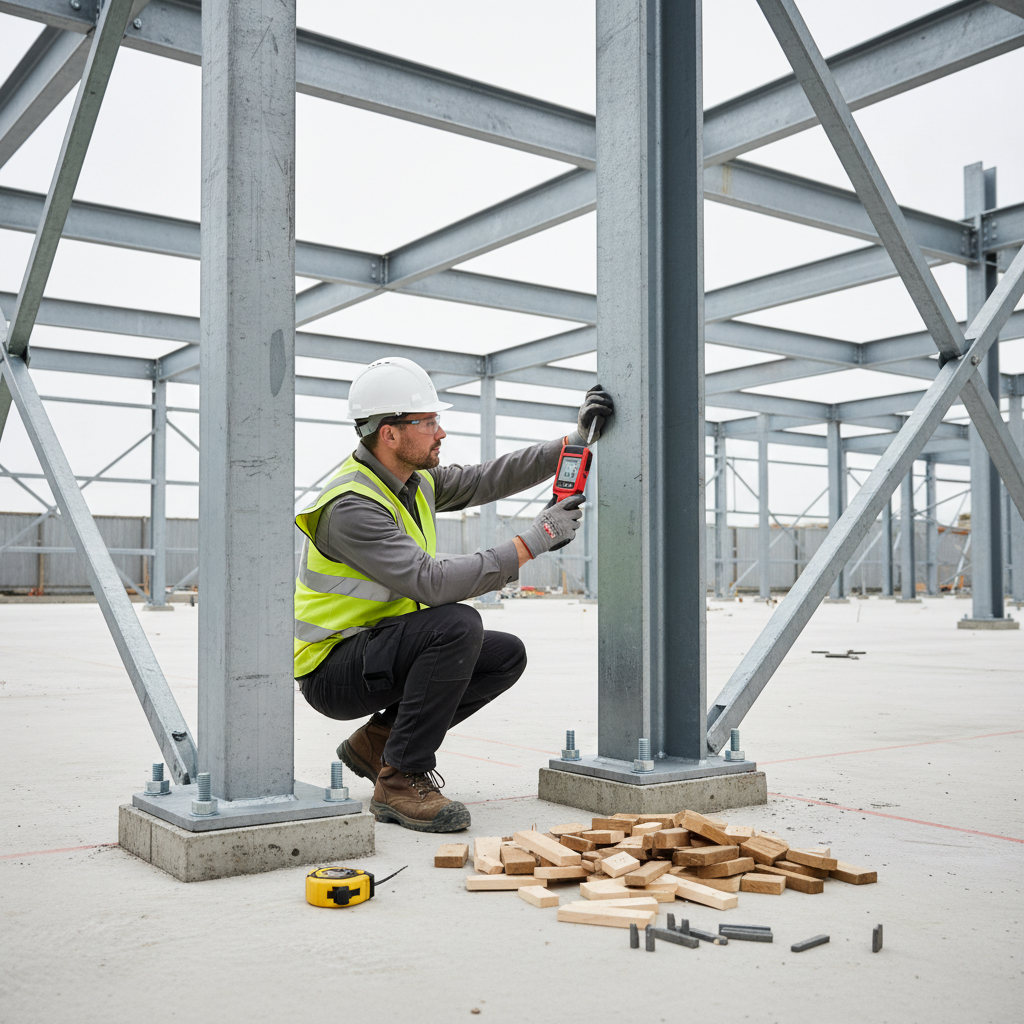
Tolerances in steel frame construction aren’t just technical requirements—they’re essential safeguards that protect the integrity of the entire building. When designing steel structures, engineers must account for the reality that no structural element can be manufactured or installed to exact dimensions. Materials expand and contract with temperature changes, fabrication processes have inherent limitations, and site conditions rarely match perfectly with design assumptions.
Without appropriate tolerances, steel components might not fit together during assembly, leading to forced connections that introduce unwanted stresses. These stresses can compromise the structure’s load-bearing capacity and potentially create safety hazards. According to the Steel Construction Institute, properly specified tolerances strike a balance between manufacturing feasibility and structural performance requirements, ensuring that buildings are both constructable and safe for occupancy.
Tolerance Types and Specifications
Steel frame construction involves several different types of tolerances that must be carefully managed. Fabrication tolerances govern the manufacturing of individual steel members, specifying acceptable deviations in length, straightness, and cross-sectional dimensions. Meanwhile, erection tolerances address how accurately these components must be positioned relative to one another during assembly on site.
British Standard BS EN 1090 provides the framework for tolerances in steel structures, categorizing them into different classes based on the building type and intended use. For example, Class 1 tolerances are the most stringent and typically apply to precision structures like crane runways, while Class 2 tolerances are standard for most building frames. Engineers must specify the appropriate tolerance class in their designs to ensure that fabricators and contractors work to the correct standards. You can learn more about related steel beam installation issues in our article on common steel beam installation mistakes.
Measuring and Monitoring Tolerances

Accurate measurement is fundamental to maintaining tolerances within acceptable limits during steel frame construction. Modern construction teams use a combination of traditional and digital tools to verify dimensional accuracy. Tape measures and spirit levels still have their place, but they’re increasingly supplemented by total stations, laser scanners, and digital levels that provide millimetre-precision measurements.
The Construction Industry Research and Information Association (CIRIA) recommends establishing a systematic approach to tolerance checking that includes defined measuring points, frequency of checks, and documentation procedures. Critical connections and load-bearing elements typically require more frequent verification than secondary components. During installation, measurements should be taken at strategic stages—before concrete is poured for foundations, after column erection, and following beam placement—to catch deviations early when corrections are still relatively easy to implement.
Common Tolerance Challenges
Even with careful planning, steel frame construction projects often encounter tolerance-related challenges that require problem-solving. Interface issues between different materials present particular difficulties, such as where steel frames connect to concrete foundations or where cladding systems attach to the structural frame. These transitions between materials with different properties and installation methods need special attention to tolerance management.
Another common challenge occurs with long-span steel members, which may exhibit natural camber (slight upward curvature) that affects alignment with adjacent elements. Environmental factors also impact tolerances, as steel expands approximately 1.2mm per 10 meters for each 10°C temperature increase. Construction teams must account for these thermal movements during installation, especially in structures spanning large distances. Our guide on how engineers ensure buildability explores additional practical considerations in structural design.
The Cost of Tolerance Failures

When tolerance management falls short, the consequences can be both financially significant and disruptive to project timelines. The Royal Institution of Chartered Surveyors estimates that rework due to tolerance issues typically accounts for 5-10% of project costs in commercial construction. These expenses include not only the direct costs of modifications but also the indirect costs of delays, which can cascade through the construction schedule and affect multiple trades.
Beyond the immediate financial impact, tolerance failures can lead to long-term performance issues in completed buildings. Doors and windows may not operate properly if frames are out of square, floor coverings might buckle if substrate levels vary too much, and building envelope systems can fail prematurely if connection points don’t align correctly. In severe cases, excessive deviations from design tolerances might even compromise the structure’s calculated load capacity, requiring expensive retrofitting solutions to restore safety factors to acceptable levels.
Best Practices for Tolerance Management
Successful tolerance management begins in the design phase with clear documentation of requirements in drawings and specifications. Engineers should identify critical dimensions where tighter tolerances are necessary and distinguish these from areas where standard tolerances are sufficient. This targeted approach prevents unnecessarily stringent requirements that might drive up costs without adding value.
During construction, regular coordination meetings help align expectations among all parties involved in the steel frame construction process. These discussions should include fabricators, erection crews, and quality control personnel to ensure everyone understands tolerance requirements and verification procedures. Digital tools like Building Information Modeling (BIM) can facilitate this coordination by simulating the assembly process and identifying potential clashes before they occur on site. For more insights on avoiding steel construction problems, see our article on common steel construction mistakes.
Conclusion
Tolerances serve as the invisible framework that ensures steel structures perform as designed throughout their service life. By understanding tolerance requirements and implementing effective management strategies, construction teams can avoid costly errors and deliver buildings that meet both functional and aesthetic expectations.
Sources
Steel Construction Institute – Accuracy of steel fabrication
CIRIA – Manufacturing and construction tolerances